Lisbon isn’t just Portugal’s capital — it’s a city that lingers in your memory long after you’ve left.
Imagine the scent of fresh custard tarts wafting from a bakery, the sound of fado echoing through narrow cobblestone streets, and the golden light reflecting on the Tagus at sunset. This is the Lisbon that travelers fall in love with.
From its hills and breathtaking viewpoints to centuries of history carved in stone, Lisbon has a unique way of blending tradition with modern charm. It’s no wonder the city has become one of the world’s most irresistible destinations. Let’s dive into what makes Lisbon truly unforgettable.
Page Contents
The Hills
Lisbon is often called the city of seven hills. The nickname dates back to the 17th century, when a friar decided to compare Lisbon to ancient Rome. Of course, the reality is messier — the city has more than seven hills, and some, like Graça, were left out because they couldn’t be seen from the river.
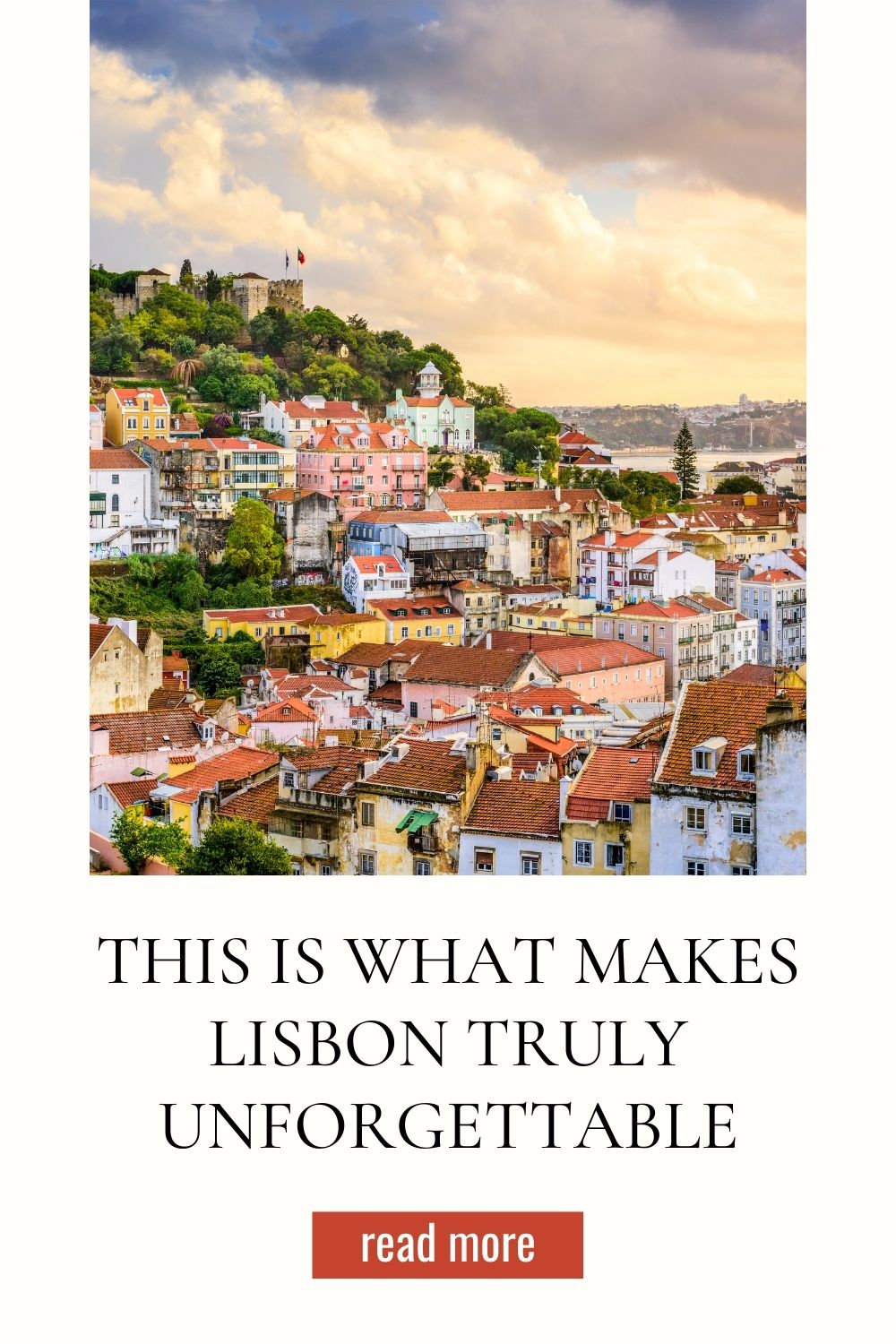
But the exact number doesn’t really matter. What defines Lisbon is the way its hills shape the city: steep cobbled streets, staircases that test your legs, and elevators that make everyday life a little easier. In return, every climb rewards you with sweeping views over the Tagus and a patchwork of red rooftops.
The hills aren’t just geography — they’re the reason Lisbon feels like a constant discovery, each corner revealing a new perspective on the city’s beauty.

The Trams
Lisbon’s iconic yellow trams are just as famous as the city’s hills. For more than a century, they’ve been rattling up and down the steep streets, squeezing through impossibly narrow alleys, and opening up to breathtaking viewpoints. What started in the 19th century as simple public transport has become one of the city’s most beloved symbols.
Most visitors immediately fall in love with the trams — the charming vintage ones, painted in bright yellow, that make you feel like you’ve stepped back in time. Today, they’re used by locals and tourists alike, but there’s no denying they’ve become part of the Lisbon experience.
The most legendary of all is Tram 28. This route winds its way from Martim Moniz to Campo de Ourique, passing through Alfama, São Jorge Castle, Baixa, and Chiado — in other words, a moving postcard of Lisbon’s greatest hits. Sure, it gets crowded, but there’s still something magical about hearing the creak of the wooden seats as the tram climbs yet another hill, carrying you deeper into the heart of the city.

Custard tarts
Ask anyone what food Lisbon is most famous for, and the answer will almost always be the same: the custard tart — or pastel de nata. This little golden pastry has gone from a convent recipe to a global superstar, and yet it still tastes best in its homeland.
A true pastel de nata is a small tart with crisp, flaky pastry filled with silky egg custard, baked until the top caramelizes into dark spots. Sprinkled with cinnamon or powdered sugar and eaten warm, it’s the kind of bite that makes you close your eyes for a moment.
The story begins in Belém, at the Jerónimos Monastery, where monks created the recipe centuries ago. When the monasteries closed, the recipe was passed on to a nearby bakery — today’s Antiga Confeitaria de Belém — which still guards the secret and sells more than 20,000 of these pastries every single day.
Across Portugal, you’ll find pastéis de nata in almost every café and supermarket. Still, there’s a clear distinction: the original Pastéis de Belém are in a league of their own. Whether you’re in Lisbon or abroad, biting into one is like tasting a piece of Portugal’s soul.

Age of Discovery
In the 15th and 16th centuries, Lisbon wasn’t just a city on the edge of Europe — it was the center of the known world. This was the Age of Discovery, when Portuguese explorers set sail in fragile wooden ships and returned with stories, maps, spices, and riches that would forever change history.
Thanks to its position at the mouth of the Tagus River, Lisbon became the perfect launchpad for voyages into the Atlantic and beyond. From here, names like Vasco da Gama and Ferdinand Magellan departed, carrying the Portuguese flag to Africa, India, Brazil, and eventually around the globe.
Lisbon flourished as a hub of navigation, cartography, and trade. It was a place where knowledge from different cultures flowed together, where wealth from faraway lands filled its palaces, and where Europe first tasted the flavors of the wider world.
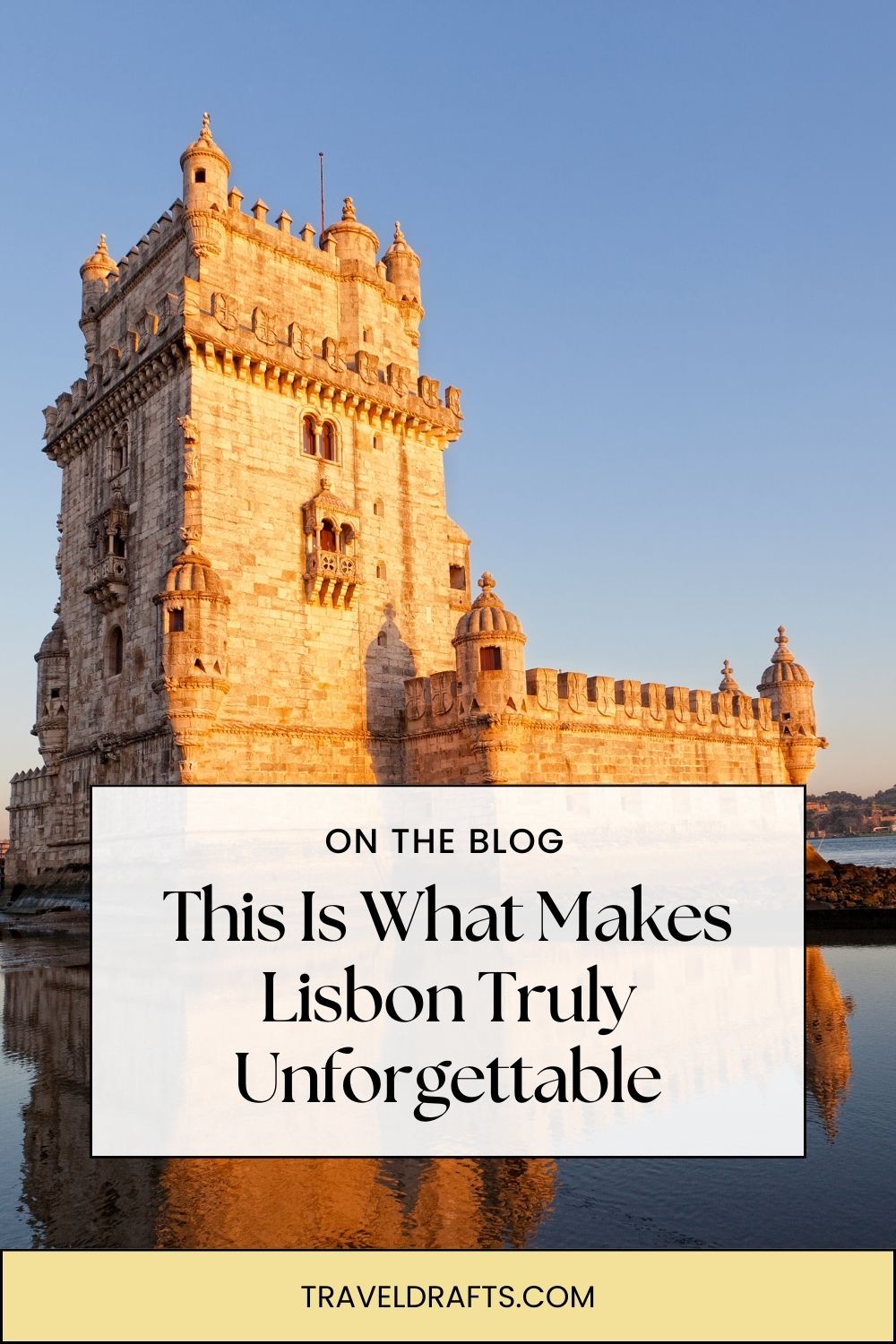
The legacy of this golden age still shapes the city today. Landmarks like the Jerónimos Monastery and the Belém Tower were built to celebrate this era of exploration, and walking through Belém, you can almost feel the spirit of adventure that once made Lisbon one of the most influential cities on earth.

Tagus River
The Tagus River is Lisbon’s lifeline — the vast estuary that defines the city far more than the Atlantic ever could. Stretching over 1,000 km from Spain before meeting the ocean in Lisbon, it is the longest river on the Iberian Peninsula and has shaped the capital’s destiny for centuries.
It was here, in this natural harbor, that ships of the Age of Discovery set sail, carrying Portugal into the history books. The river made Lisbon a strategic hub for trade and exploration, turning it into one of Europe’s great maritime capitals.
But the Tagus isn’t just about history. Today, its wide, glittering waters still dominate the city’s skyline. From the modern waterfront of the Parque das Nações (built for Expo 98) to the elegant squares of Baixa and the monumental landmarks of Belém, life in Lisbon continues to revolve around the river.
Whether you’re strolling along its banks, watching the sunset behind the 25 de Abril Bridge, or simply pausing at a café with a view, the Tagus is always there — calm, constant, and unmistakably Lisbon.

1755 Earthquake
Few events have shaped Lisbon as profoundly as the earthquake of 1755. On the morning of November 1st — All Saints’ Day — the city was packed with worshippers when the ground began to shake violently. Within minutes, entire neighborhoods crumbled. Then came a tsunami that swallowed ships in the harbor and swept away the city’s waterfront. As if that weren’t enough, raging fires ignited and burned for days, reducing what was left of Lisbon to ashes.
Historians estimate that tens of thousands perished, making it one of the deadliest earthquakes in recorded history. But its impact went far beyond physical destruction. The catastrophe forced Lisbon — and Europe— to rethink the world. For many, it marked the end of the idea that disasters were divine punishment and sparked debates that helped fuel the Enlightenment.
In Lisbon itself, the city rose from the ruins with an entirely new face. Under the Marquis of Pombal’s leadership, downtown was rebuilt with a modern, grid-like plan and innovative earthquake-resistant construction — centuries ahead of its time. Today’s Baixa district, with its wide squares and elegant avenues, is a direct result of this rebirth.
The memory of 1755 lingers in Lisbon’s identity: a reminder of destruction, resilience, and transformation that still echoes through its streets.

Fado Music
When you think of Lisbon, the sound of Fado instantly comes to mind. This hauntingly beautiful music, which emerged in the streets and taverns of 19th-century Lisbon (and possibly even earlier), captures the soul of the city — melancholic, nostalgic, and full of longing.
Sung with the delicate accompaniment of a Portuguese guitar and a classical guitar, Fado tells stories of life at sea, love, loss, and fate. Its power lies in its emotion: each note can make you pause, reflect, and feel the heartbeat of Lisbon itself.
The genre gained worldwide fame thanks to legendary singers like Amália Rodrigues, and in 2011, Fado was recognized as a UNESCO Intangible Cultural Heritage.
Today, there’s no better way to experience Lisbon’s spirit than attending a live Fado performance in a cozy restaurant or club. For those wanting to dive deeper, the Museum of Fado offers a fascinating glimpse into its history and enduring magic.

Sunny Weather and Magical Light
Lisbon isn’t just a city you visit — it’s a city you feel bathed in light. With a Mediterranean climate, Lisbon enjoys long, sunny days almost all year round. Summers sizzle with up to 11 hours of sunshine per day, while even winter brings a generous five hours, making it the sunniest capital in Europe.
This endless sunshine isn’t just about warmth — it transforms the city. The soft golden glow reflects off terracotta rooftops, pastel-colored façades, and the gentle waves of the Tagus River, creating what artists, photographers, and filmmakers have long called the magical light of Lisbon. It’s the kind of light that makes every street, viewpoint, and café moment feel cinematic.
For travelers, this means every stroll, every photo, every evening on a miradouro feels unforgettable. Lisbon’s light doesn’t just illuminate the city — it illuminates the experience of being there.

Ginjinha
If you want to taste Lisbon in a sip, there’s nothing quite like Ginjinha. This sweet and strong cherry liqueur, made from sour cherries called ginja, has been a Portuguese favorite for generations.
The berries are soaked in aguardente — a potent local spirit — with sugar and warm spices like cloves and cinnamon, creating a drink that’s both comforting and bold.
In Lisbon, Ginjinha is more than a drink — it’s a ritual. Served in tiny cups, sometimes even chocolate ones, and often with a cherry at the bottom, it’s meant to be savored standing at a counter in one of the city’s historic neighborhoods. Baixa, Rossio, and Alfama have many small bars where locals and travelers alike pause for a quick taste. Famous spots like Ginjinha Espinheira, Ginjinha Sem Rival, and Ginjinha Rubi carry on the tradition.
It’s also a popular souvenir — a small bottle of Lisbon’s cherry liqueur makes a perfect taste of the city to bring home. One sip, and you’ll understand why Ginjinha is a true Lisbon classic.
Portuguese Tiles
Another popular Portuguese typical feature in Lisbon is the Portuguese tiles, known as Azulejos. Although they are available everywhere in Portugal, they are particularly visible in Lisbon, which is why Lisbon is known for them.
Azulejo is a form of Portuguese (and Spanish) decorative ceramic tile that, besides being ornamental, also served the functional purpose of controlling temperature. They are found on the interior and exterior of almost any type of building in Portugal, ranging from churches and palaces to ordinary private homes and public buildings, including railway stations, restaurants, and bars.
Azulejos were introduced in Portugal in the 13th century by the Moors and quickly became a popular decorative element. They have a long history in Lisbon and are a crucial part of the architecture and design of the city, often used to create intricate designs and murals.
So, while not exclusive to Lisbon (or even Portugal), Azulejos are significant for the city and draw the attention of almost any visitor to the Portuguese capital. Their bright colors and intricate patterns elevate the city’s beauty even more.
Portuguese Tiles
Walk through Lisbon and you’ll notice a city wrapped in color and pattern — the iconic Portuguese tiles, known as azulejos. While found across Portugal, Lisbon displays them like an open-air gallery, covering churches, palaces, cafés, railway stations, and even ordinary homes.
Introduced in the 13th century by the Moors, these decorative ceramic tiles were not only beautiful but practical, helping control temperature inside buildings. Over centuries, Lisbon made them its own, creating intricate murals and designs that tell stories of history, faith, and everyday life.
Every corner offers a new surprise: vibrant blues, yellows, and greens catching the sunlight, turning streets into art. Whether you’re admiring a grand mural in a church or a tiny pattern above a doorway, the azulejos are a symbol of Lisbon’s creativity and charm. This detail makes the city unforgettable.

Calçada Portuguesa
Step carefully, because Lisbon’s streets are works of art under your feet. The Calçada Portuguesa, or Portuguese pavement, is a centuries-old tradition of creating intricate designs using small, flat stones. Initially, the pavements were made of white limestone and basalt; today, they also feature black limestone and other colors like red, blue, gray, and yellow.
These patterns are more than decoration — they tell stories through geometric and figurative designs, turning ordinary sidewalks and squares into open-air galleries. Wander through Rossio Square, Restauradores Square, Parque das Nações, or along the Padrão dos Descobrimentos in Belém, and you’ll see some of the most famous examples.
The calçada is not only beautiful but also a part of Lisbon’s cultural heritage. Just watch your step — these artistic floors can be slippery in high heels! Still, locals and tourists alike can’t resist tracing the patterns with their eyes and feet, appreciating yet another detail that makes Lisbon unforgettable.

All the famous landmarks
Lisbon is a city where history and modernity collide, and its landmarks are living proof. From medieval castles to contemporary marvels, each corner tells a story.
The imposing São Jorge Castle crowns the city’s highest hill, offering panoramic views over red rooftops and the Tagus River. Along the waterfront, the Belém Tower and the Monument to the Discoveries celebrate Portugal’s Age of Discovery, while the majestic Jerónimos Monastery stands as a masterpiece of Manueline architecture.
In the heart of the city, the Lisbon Cathedral and the Carmo Church Museum whisper tales of faith, resilience, and the 1755 earthquake. Wander through Commerce Square, ride the Santa Justa Lift, or gaze at the sweeping expanse of the 25 de Abril Bridge. For a taste of modern Lisbon, the Oceanarium delights visitors with its spectacular marine life displays.
Each landmark is more than a sight — it’s an invitation to step into Lisbon’s past, admire its present, and feel the pulse of a city that has inspired explorers, artists, and travelers for centuries. Check our Portuguese Landmarks article, ff you want to learn more about these and other landmarks across Portugal.