Finding a genuine break from the city usually means looking for places where the landscape sets the rhythm. For those accustomed to the pace of urban life in the UK, stepping away to the coast or the countryside isn’t simply a change of scenery — it’s a different relationship with time. These five destinations offer something more grounded: local history, long walks, unhurried meals, and the particular relief of having nowhere urgent to be.
Page Contents
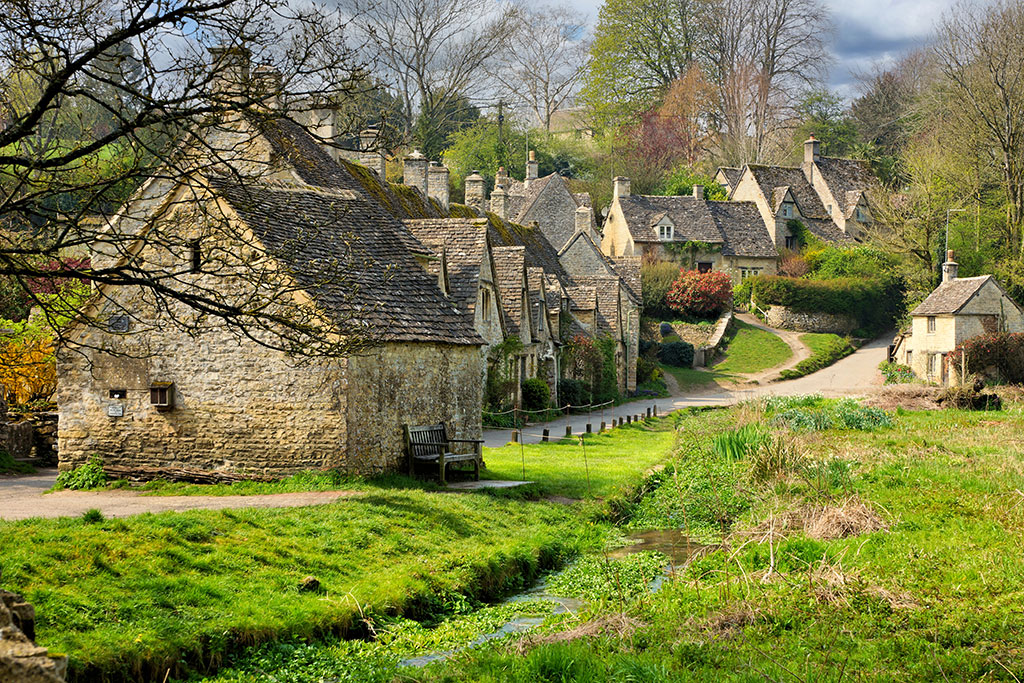
Rural Glamping in the English Countryside
Glamping has quietly matured as a travel category. What began as a novelty — camping without the discomfort — has settled into something genuinely appealing for people who want to be outside without sacrificing a good night’s sleep. Areas like the Cotswolds, Somerset, and East Sussex have seen a steady growth in high-quality sites: bell tents and shepherd’s huts set on working farmland or at the edges of ancient woodland, equipped with proper bedding, wood-burning stoves, and very little else demanding your attention.
Choosing glamping holidays is an effective way to stay in rural settings while maintaining comforts like proper bedding and wood-burning stoves. The appeal is partly structural. Once you arrive, there’s almost nothing to organise. Your time shifts outdoors almost automatically. Walks typically begin right from your pitch, following public footpaths through fields and hedgerows that have been in use for centuries. In the South Downs, these routes open out to wide chalk ridges with long views in every direction — the kind that take a moment to adjust to after weeks of looking at buildings.
Local markets are worth working into the schedule. Stroud Farmers’ Market, running every Saturday in the town centre, draws producers from across Gloucestershire and has the easy, unhurried quality of somewhere people come to talk as much as to shop. You can put together a proper meal — bread, cheese, charcuterie, something seasonal — without needing a reservation or a plan. Evenings, once the fire is going, take care of themselves. The darkness in these spots is genuinely dark, and the stars on a clear night feel like a reasonable reward for leaving the city behind.
Coastal History and Trails in Cornwall
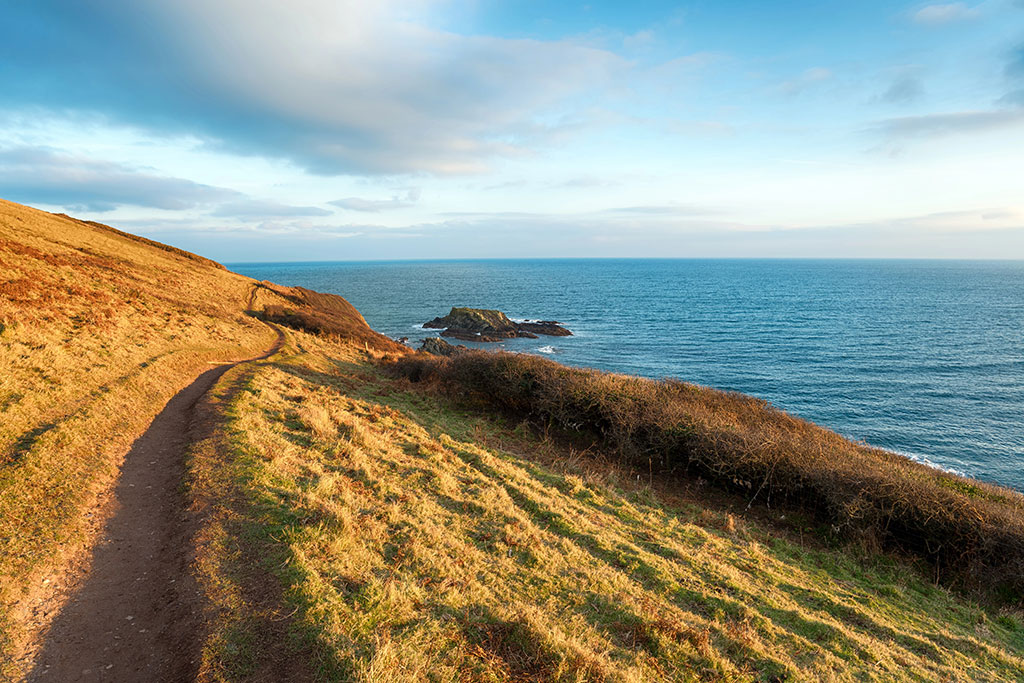
Cornwall is well-trodden as a destination, but not all of it equally. While Newquay and Rock have their summer crowds, there are stretches of the county that hold their quiet even in July. Porthleven, Portscatho, and the coastline around Constantine Bay operate at a different register — narrower streets, fewer chain restaurants, harbours that still look like they’re built for working boats rather than photographs.
The South West Coast Path does most of the work here. Walking sections of it gives you long views over cliffs and open Atlantic water, with the path frequently dropping down to beaches that are harder to reach by road. Around Kynance Cove, the serpentine rock formations shift between dark green and rust depending on where the light falls — it’s the kind of thing that doesn’t translate well to a photo but stays with you. Near Boscastle, the narrow harbour cuts back into the cliffs in a way that feels theatrical and slightly improbable, as if someone designed it for effect.
The smaller details accumulate. Watching fishing boats come in at Mevagissey Harbour on a grey morning, the water still and the catch being sorted on the dock, has a specific kind of interest that no planned attraction can replicate. The Camel Trail, running from Padstow along the estuary to Bodmin, is flat and easy and regularly full of cyclists and walkers moving without urgency. St Michael’s Mount, with its causeway appearing and disappearing with the tide, offers a natural structure to the day: you can time your crossing, explore the island, and watch the water creep back over the stones on your return. It requires almost no planning and stays interesting regardless.
Culture and Landscape in Rural Ireland
Ireland rewards patience. The larger cities — Dublin, Cork, Galway — have their own energy, but the country’s particular character becomes clearer once you move into smaller towns and the quieter counties. Kerry, Clare, and Galway’s more rural stretches offer a combination of landscape and everyday life that can be genuinely hard to find elsewhere in Europe. Traditional music drifts out of pub doorways in Dingle on a weekday afternoon. The pace of conversation in smaller towns — at a market stall, over the counter at a bakery — tends toward the unhurried without being mannered about it.
Exploring in a group makes things easier here, which is why small group tours of Ireland are great, especially for solo travellers looking to meet others and tap into local knowledge. Local knowledge matters, and the distances between points of interest can be deceptive on a map. Quieter stretches of the Ring of Kerry, the coastal roads near Loop Head, or the limestone expanse of the Burren in County Clare are genuinely rewarding but benefit from being approached with some guidance — the kind of knowledge about which track to take or which small harbour café is actually open that takes years to accumulate. Going with someone who has it saves a lot of guesswork.
Markets are a good anchor for any itinerary. Galway Market, clustered around Church Lane and St Nicholas’ Church in the centre of the city, is lively and accessible without feeling like a tourist attraction. Weekly markets in smaller towns — Kenmare, Dingle, Ennistymon — tend to draw in farmers and craftspeople from the surrounding area and become, briefly, the centre of their own small universe. Sitting nearby with something to eat and watching it unfold is a low-effort pleasure that rarely disappoints.

Ancient Woodland and Salt Marsh in the New Forest
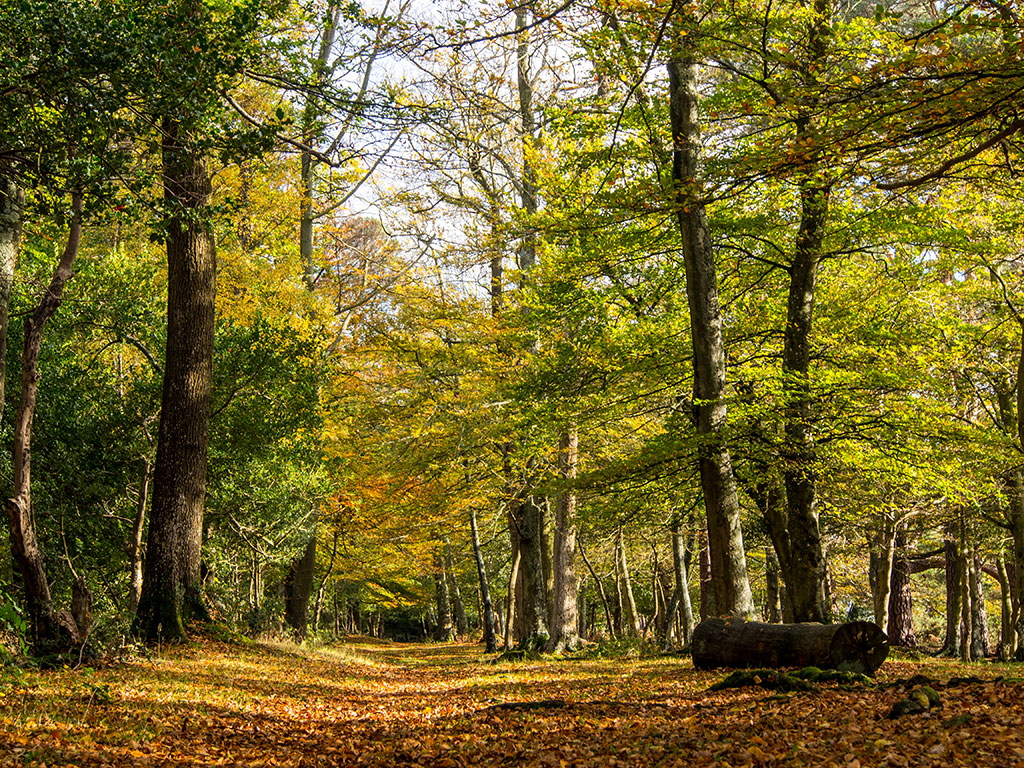
The New Forest occupies a strange and particular place in the English landscape. Technically a national park, it operates more like a survival from an older England: ancient pasture and dense oak woodland managed under medieval grazing rights, where ponies, donkeys, and cattle wander freely across roads and into villages without ceremony.
The villages of Brockenhurst and Lyndhurst are the main gateways and useful bases, but the forest rewards those who move deeper into it. Rhinefield Ornamental Drive passes under some of the tallest trees in Britain — Douglas firs and redwoods planted in the nineteenth century that now form a canopy high enough to create a distinct, cathedral-like quiet. The Bolderwood Deer Sanctuary offers a good chance of seeing fallow deer at close range, particularly in the early morning or late afternoon. Most of the forest paths are flat and well-marked, making it straightforward to cover a reasonable distance without much preparation.
The terrain shifts meaningfully within a short distance. Near the Beaulieu River, the landscape opens out into salt marshes and quiet waterways that feel entirely separate from the woodland a mile or two back. The village of Bucklers Hard, a former shipbuilding site on the river’s edge, has a particular stillness — two rows of Georgian cottages, a small museum, and a view down to the water where naval ships were once built and launched. It’s the kind of place that holds something, though it takes a moment to work out what.
Architecture, Water, and Rest in Bath
Bath works as a destination for different reasons than the others on this list. It is still a city, but a small and contained one, and its Georgian architecture gives it a coherence that larger cities rarely manage. Walking along Milsom Street, through Queen Square, or up to the Circus, the scale stays human, and the stone stays warm in good light. The city was built to be walked in, and it still rewards that.
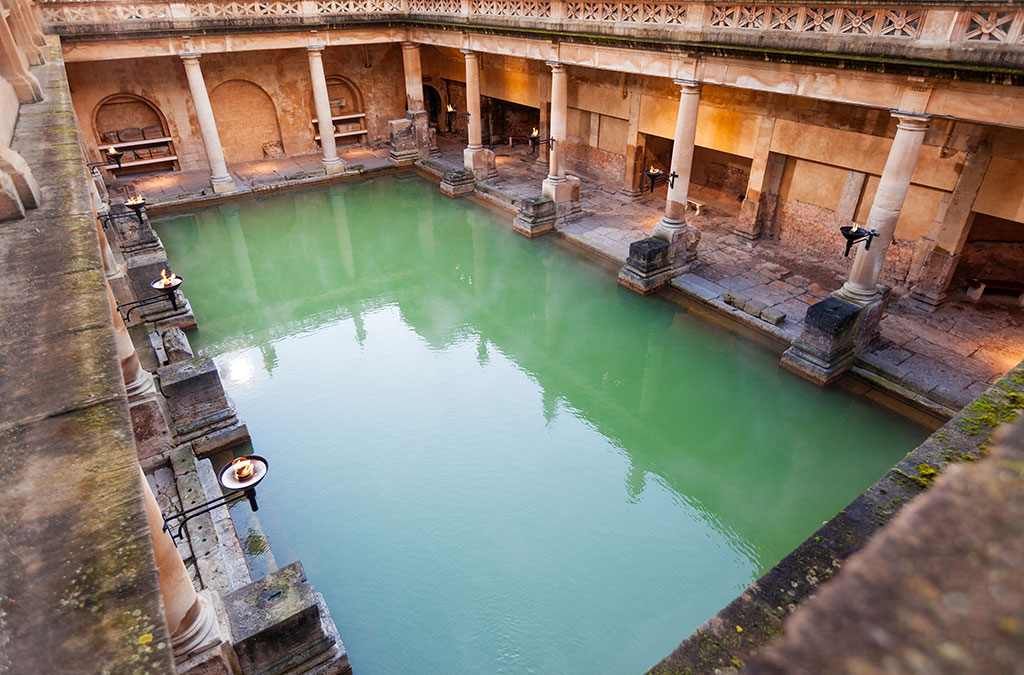
The Roman Baths are the obvious starting point — extensive, genuinely interesting, and busy throughout the day — but the area immediately around them has its own quieter corners. Pulteney Bridge leads out across the Avon towards the Georgian residential streets of Bathwick, where the crowds thin quickly. The towpath along the river offers a flat, easy walk in either direction: east towards the Kennet and Avon Canal and the quieter edge of the city, west through parkland. Sally Lunn’s, one of the oldest buildings in Bath, is worth a stop not for any particular spectacle but for the kind of old-fashioned plainness that can feel like a relief.
The thermal spa tradition that made Bath what it is remains genuinely available. Thermae Bath Spa, built into the city’s historic core, offers access to rooftop pools fed by the same natural hot springs the Romans built over. The experience is unhurried by design — you book a session, arrive, and spend a couple of hours in warm water above the rooftops while the city gets on with itself below. It’s not unusual to leave feeling, as much as anything else, that the pace of the day has reset to something more manageable. That, in the end, is what most of these places are offering: not escape so much as recalibration.
On Finding the Right Pace
What connects these destinations is less about geography than about tempo. Each of them offers something that cities make structurally difficult: time that isn’t scheduled, landscape that doesn’t ask anything of you, and the particular satisfaction of being somewhere that works at a human scale. The logistics, in most cases, are straightforward. The point is to arrive somewhere and let it be enough.