Tokyo or Seoul—two megacities, many similarities, but two completely different vibes, and both full of surprises.
From buzzing streets and hidden temples to epic food scenes and vibrant nightlife, each city has its own personality. We broke down what really stood out during our trips, helping you decide which city matches your travel style—and where your next adventure could take you.
Spoiler: Both cities impressed us in very different ways.
- If you are planning a trip to Japan, have a look at our Japan Travel Guide
- If you are planning a trip to Korea, have a look at our Korea Travel Guide
| Tokyo | Seoul |
|---|---|
|
|

Page Contents
What Surprised Us Most
Size & Vibe
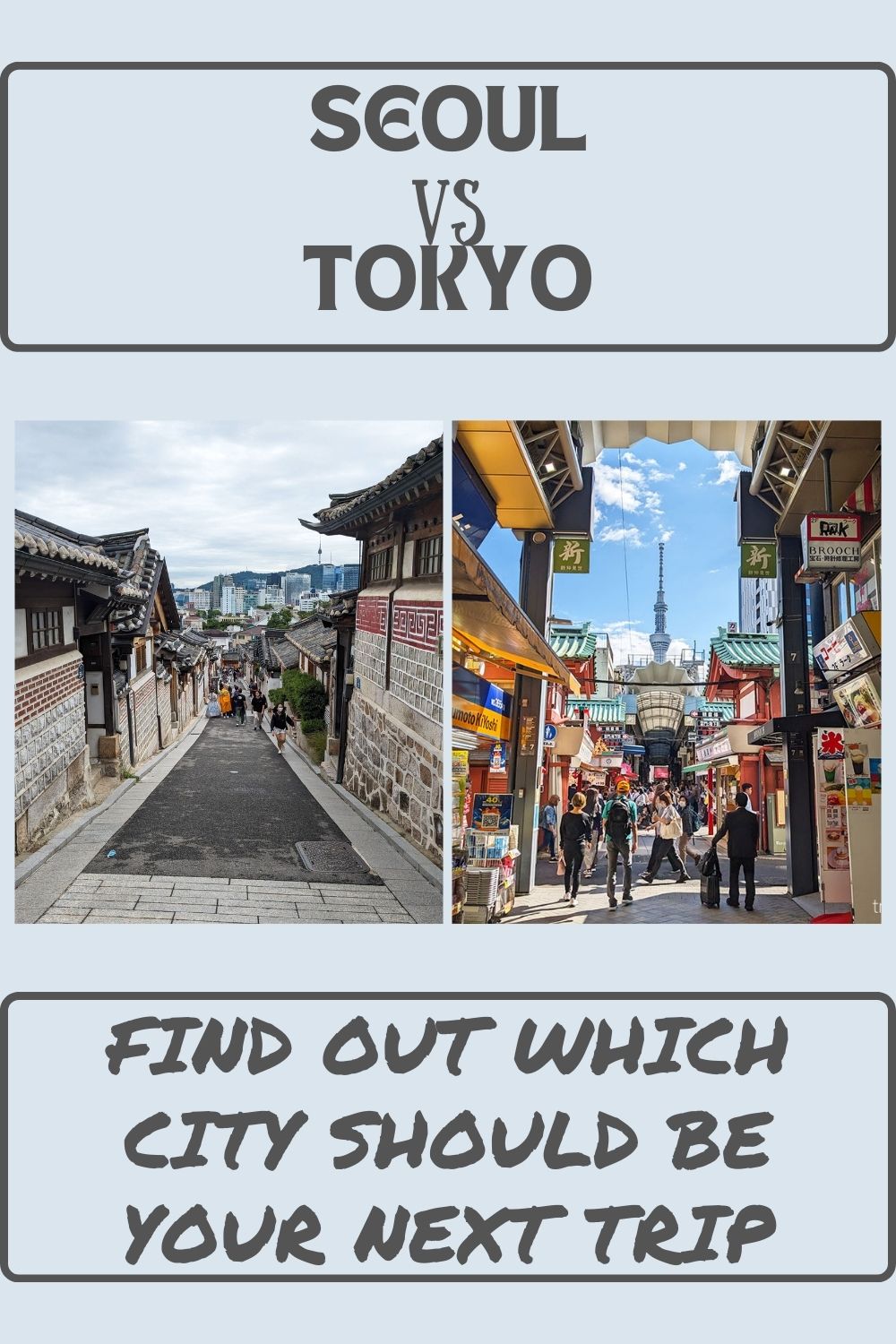
- Tokyo: Endless and electric. Skyscrapers stretch forever, each neighborhood feels like its own world, and the energy can be overwhelming—but that’s precisely what many visitors fall in love with.

- Seoul: Still a megacity, but more approachable. Big parks, calmer neighborhoods, and the contrast of futuristic malls with peaceful temples make it feel refreshingly balanced.

Top Experiences
- Tokyo: Tsukiji street food, Shinjuku nightlife, Asakusa temples, luxury shopping in Ginza, and the Tokyo Tower skyline. A mix of the ultra-modern and the deeply traditional, often in the same day.

- Seoul: Gyeongbokgung Palace, snacking through Myeongdong, biking along the Han River, quirky Hongdae cafés, and relaxing in a jjimjilbang. Less polished than Tokyo, but often more personal.

Day Trips
- From Tokyo: Mt. Fuji and Hakone hot springs are classics—easy to reach thanks to Japan’s world-class trains, and some of the most memorable day trips in Asia.

- From Seoul: The DMZ offers a thought-provoking, surreal experience, while Suwon’s Hwaseong Fortress is a cultural gem much closer to the capital.

Food & Nightlife
- Tokyo: A foodie’s paradise. Michelin-starred sushi at lunch, ramen in a back-alley at night, plus nightlife ranging from jazz bars to neon karaoke and capsule bars.

- Seoul: Bold and social. Korean BBQ and spicy jjigae are experiences in themselves, with street snacks everywhere. Add quirky cafés and buzzing soju bars, and nights quickly become unforgettable.

Budget & Essentials
- Tokyo: More expensive for taxis and hotels, but surprisingly affordable for meals and daily life. Convenience stores and reliable public transport make it easier than most expect.
- Seoul: One of the most budget-friendly capitals in the developed world. Cheap, efficient transit, low-cost cultural sites, and welcoming locals make it a great value.

Interaction & Local Feel
- Tokyo: People are polite, reserved, and incredibly helpful. Service in restaurants, shops, and public transport often feels exceptional, even if interactions are more formal and less chatty. Expect respectful gestures, efficiency, and a quiet attentiveness.
- Seoul: Locals are often warm, friendly, and curious about visitors. English may not always be perfect, but gestures, smiles, and willingness to help make it easy to navigate. From helping a lost tourist to giving directions on the metro, the human side of the city often leaves a memorable impression.

Safety & Cleanliness
- Safety: Both cities are consistently ranked among the safest in the world. Violent crime is extremely rare, and walking alone at night is generally worry-free. Pickpocketing can happen in crowded areas, so stay alert, but overall, you can feel secure exploring neighborhoods, night markets, and transport hubs without constant worry.
- Cleanliness: Tokyo is famously spotless—the streets, trains, and public spaces feel meticulously maintained, and even air quality is often better than many other major cities. Seoul is very clean too, especially in central areas and tourist zones, but some districts can feel a bit dustier or more affected by seasonal pollution.


Tip
Public trash bins are surprisingly scarce in both cities. Carry a small bag for your trash until you find a proper disposal point—this is standard local practice and part of keeping the cities so tidy.
Which City Fits You Best?
Seoul is ideal if you:
- Enjoy K-dramas, K-Pop, and Korean pop culture.
- Are you looking for beauty products and unique cosmetics?
- Love trying new foods, especially bold and spicy flavors.
- Prefer a relaxed, easy-going vibe.
- Appreciate friendly and approachable locals.
- Want to visit a developed, safe country with modern infrastructure.
- Want to enjoy a fantastic city without overspending.

Tokyo is the best fit if you:
- Want to experience a modern, bustling metropolis.
- Are fascinated by Japanese culture—there’s nothing quite like it.
- Crave some of the world’s best food.
- Don’t mind crowds, especially at famous sights.
- Seek a highly developed and very safe city.
- Appreciate excellent public transport and love trains.
- Want nightlife filled with anime, manga, arcades, and karaoke.
- Enjoy shopping, from handicrafts and design items to stationery.

The best option for you depends on what you are looking for and your personal preferences. If you are into K-culture, you’ll prefer Korea; if you are into manga or Samurai, Japan will obviously be much closer to your heart.
As the capitals of neighboring countries with long historical relationships (not always friendly ones), they have several similarities, but they are also very different in many ways. Yet, you should know that whatever the reason for your trip, these destinations are outstanding.