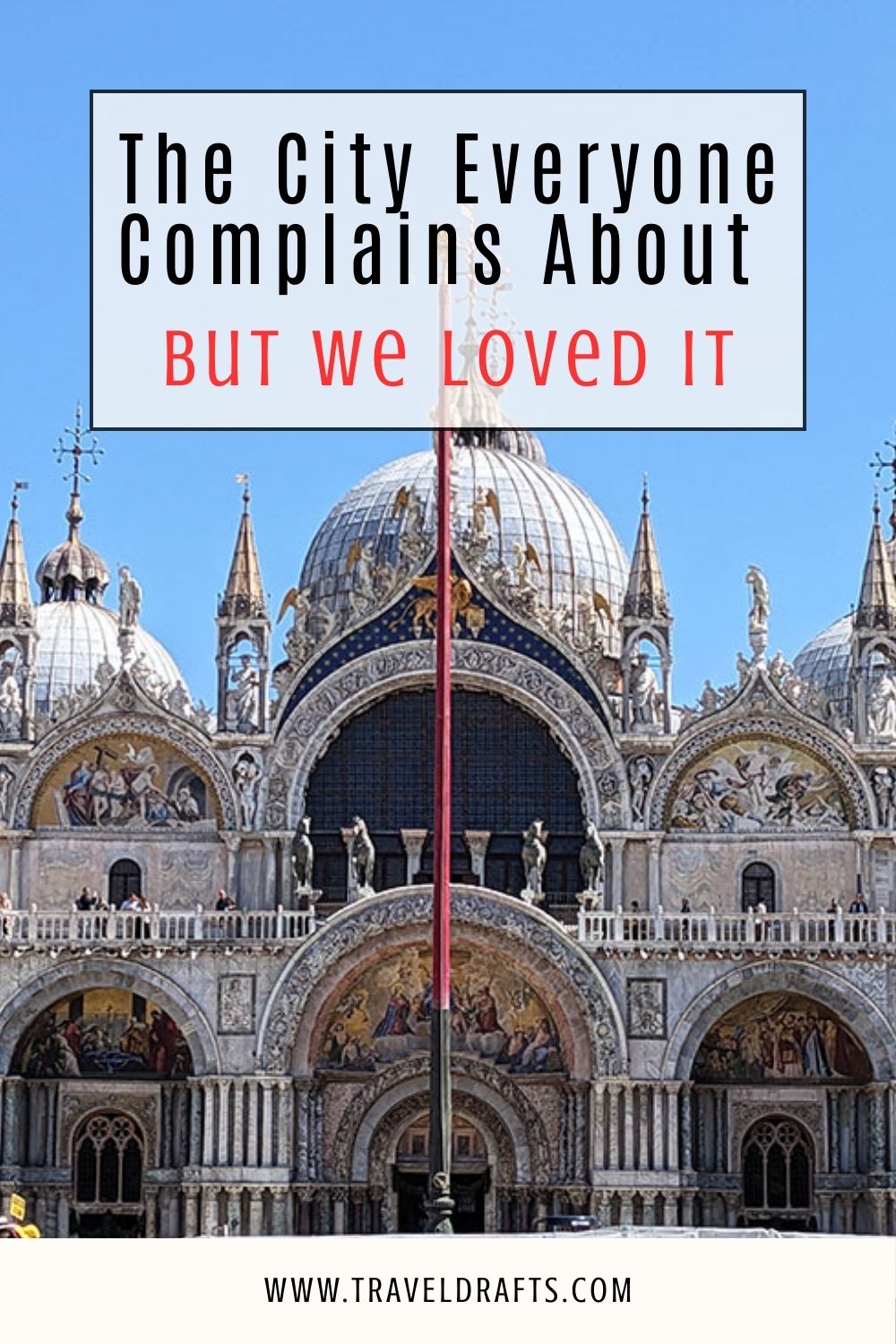
Crowded, overpriced, sinking… This is the city everyone seems to complain about.
We heard all the warnings before going, but once we wandered its canals and crossed its bridges, we quickly understood why it’s one of the most famous cities in the world — and why we loved it, even though we have overcrowded and overpriced places!
Located in northeastern Italy, Venice is the capital of the Veneto region. Together with Padua and Treviso, it forms a metropolitan area known as PATREVE, home to more than 2.5 million people. The historic center, however, is surprisingly small, with only approximately 55,000 residents as of 2020.
Venice may not be to everyone’s taste, but there’s no denying its uniqueness. Few places in the world are as instantly recognizable or as fascinating. Let’s dive into what makes this controversial city so special.
Page Contents
12 Things Venice Is Renown For
Lagoon
The Venice Lagoon is one of the most iconic characteristics of Venice – one that was crucial for the city’s development, defense, and historical significance. It is also the reason why Venice is so distinctive from any other European city.
With about 550 km², the lagoon is the largest wetland in the Mediterranean. The water is mostly shallow, allowing the city to develop on the islands of the lagoon. This unique setting served as a protective barrier, making it difficult for invaders to approach the town directly.
The lagoon was also an essential means of transportation and trade for centuries. Its shallow water allows the construction of a complex system of canals, bridges, and docks. For centuries, Venice was a vast maritime empire and dominated many trade routes. The lagoon was an exceptional hub for merchant ships and naval fleets.
Today, the lagoon remains vital to the city, as it is one of Venice’s most famous attractions. It is the base for many other things that Venice is renowned for, such as the canals, bridges, and gondolas.
The Venetian Lagoon has been part of the UNESCO Heritage Site since 1987, which includes the city itself. However, it is always under scrutiny from UNESCO because of its fragile ecosystem. Unfortunately, but not surprisingly, the lagoon suffers from high variations in water levels (known as acqua alta), which regularly flood much of Venice.
For all this, it is unsurprising that two of the most popular nicknames of Venice are “the Floating City” and the “City of Water.” And while some dismiss it as “just water,” for us, the lagoon is what makes Venice magical.

Canals
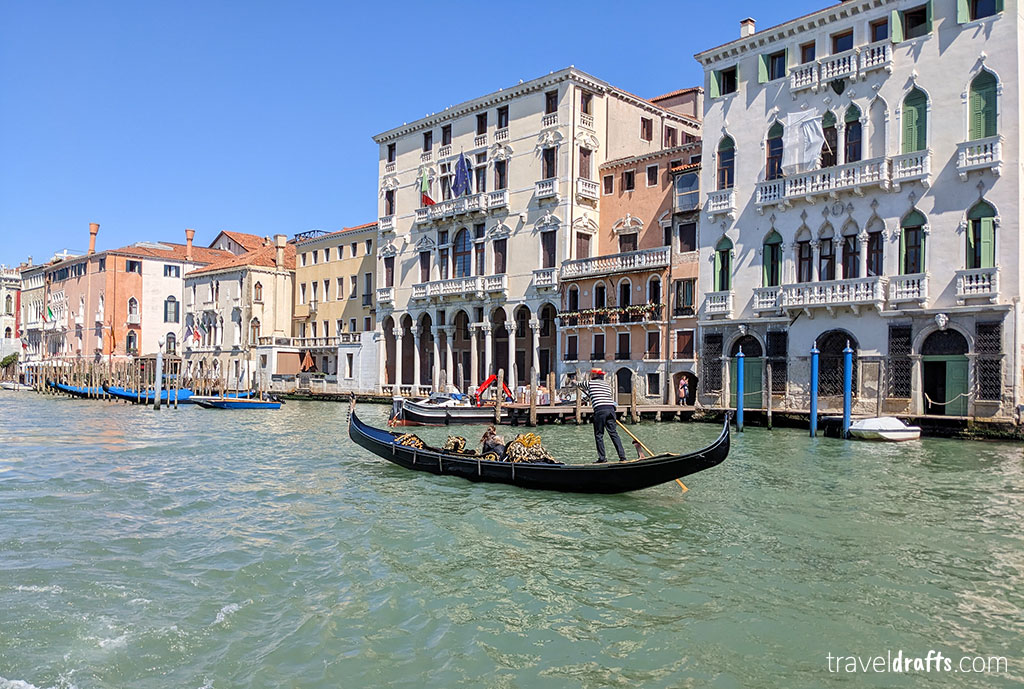
Another of the most popular nicknames of Venice is the “City of Canals.” They are one of the city’s most striking and iconic features, and the arteries that connect everything in it.
One might think that Venice was built on an island and that canals were constructed later, but that is not quite the case. Venice was developed on a group of 118 small islands inside the lagoon. Canals and open water separate these islands (of very different sizes). The canals both unite and separate the city.
The canal network was a practical solution to its challenging location. The marshy islands and the absence of solid ground made it impossible to have a typical road network. So the canals became the primary means of transportation within the city.
The intricate network of canals we see today is a testimony to Venice’s history, unique urban planning, and ingenuity. In the past, they provided vital transport routes for goods and people, facilitating trade and commerce. Today, the canals are a major tourist attraction and a key element in Venice’s fame.
Yes, they’re crowded today, but gliding along the canals is still one of the most unique experiences you can have in Europe.

Bridges
The Canals are an integral part of the Venetian experience and continue to captivate visitors. Still, the bridges connecting the islands are equally vital to promote the city’s aesthetic and accessibility.
Venice has over 400 bridges of very different sizes, importance, and fame. Some are iconic and beautiful, such as the Bridge of Sighs, the Rialto Bridge, and the Accademia Bridge. Besides their functional character, they became landmarks of the city.
The Rialto Bridge is the most famous of the bridges in the Grand Canal, dating back to the 16th century. It is an architectural marvel and a symbol of Venice. It is also a bustling hub lined with shops and market stalls, attracting thousands of visitors daily.
The Bridge of Sighs is very different. Located near the Doge’s Palace, it was built in the 17th century, connecting the interrogation rooms in the palace to the prisons across the canal. The name originates from the belief that prisoners would sigh as they last saw the beautiful city before incarceration.
People complain that the bridges are too busy to appreciate, but stopping on a quiet one at sunset was one of our favorite Venice moments.

Gondolas
Another iconic feature of Venice is the gondolas that populate the city’s canals, capturing tourists’ imaginations and adding elegance to the already beautiful setting.
Gondolas are sleek, black, flat-bottomed boats propelled by a gondolier using a rowing oar. Their graceful shape, asymmetrical hull, and distinctive iron prow make them unique boats adapted to the reality of Venice.
In the past, the Gondolas were the primary public transport in the city, serving as water taxis and the most common watercraft in the canals. However, their primary role today is carrying tourists at fixed rates for canal tours.
Venice has about 400 gondoliers (always dressed in their traditional striped shirts and straw hats) and about the same number of boats. In the past, there were several thousand. Despite being a truly tourist experience, it is also a fun and unique one. The way the gondolas are expertly steered in the winding canals is memorable.
Sure, gondola rides are pricey and touristy — but honestly, it was one of our favorite Venice memories.
Crowded
It is no secret that Venice is a remarkable destination. It boasts beautiful monuments, museums, a rich and fascinating history, excellent food, and, of course, a unique setting in the lagoon. Additionally, everything comes together in a relatively small area, making it perfect for romantic escapes, solo travelers, families, and groups.
The problem? Well, everyone knows this… almost everyone has Venice high on their list of places to visit. Thus, it attracts millions yearly. In 2019, about 5.5 million people visited Venice, a city of 55,000 people without roads or cars.
You can imagine how crowded it can be during the high and holiday seasons. However, it is worth noting that Venice remains popular throughout the year. Even in the low season, Venice will still attract many travelers. In this regard, it is similar to Florence.
We are not complaining (well, maybe a bit), the city is impressive, so it’s only normal that so many people want to experience it, as do we and probably you. Just be prepared for it. You will still be able to enjoy the city’s beauty and create lovely memories. In fact, early mornings and late evenings gave us some of the most peaceful moments in Venice.

Carnival
The carnival is possibly the most popular festivity in Venice. Dating back to the Middle Ages, it was initially a time of indulgence and celebration before Lent.
Over the centuries, it evolved into a grand celebration, reaching its zenith in the Renaissance. It was, however, suppressed in 1797 and only revived in 1979. Since then, its popularity has grown exponentially, becoming once again one of the most anticipated events in the world. And together with the Rio de Janeiro Carnival, one of the two most famous in the world.
Deeply rooted in Venetian history and tradition, the carnival of Venice is famous for its elaborate masks, vibrant costumes, and a captivating atmosphere of mystery and revelry. The tradition of masks is one of the most enchanting aspects of the carnival, allowing participants to conceal their identities.
The Carnival of Venice is also renowned for its visual splendor, with elaborate costumes that evoke the opulence and grandeur of the Venetian past. The streets come alive with a multitude of performances, including musical concerts, theatrical shows, and masquerade balls held in historic palaces. The canals become a stage for gondola parades and regattas.
With a magical and surreal atmosphere, the Carnival of Venice transports people into a world of fantasy, artistry, and freedom of expression. At the same time, it is a celebration of the city’s rich cultural heritage and tradition.
Some call it overhyped, but seeing the masks and colors in the streets feels like stepping into a dream.

Masks
As mentioned above, masks play a central role in the Carnival festivities. The intricately crafted masks, adorned with feathers, gems, and gilding, add an air of mystery, elegance, and intrigue to the carnival. They allow participants to conceal their identities and engage in a spirit of anonymity and freedom.
Masks allowed people of different classes to mingle and engage without fear of judgment or consequence. They provided a sense of liberation, allowing them to explore their desires and indulge in a fantasy world.
However, masks have a broader meaning than this festival. Traditionally, they were used between the 26th and the end of the Carnival season. Plus, they were also allowed on Ascension and from October 5 to Christmas. They are also significant in events like theatrical performances and masquerade balls throughout the year.
There are many well-known types of masks, some with intricate designs, exquisite details, and styles. But the most iconic is the Baute, a simple, stark white mask designed to comfortably cover the entire face, maintaining the wearer’s identity unknown at all times. Others include the Colombina, the Plague Doctor, Moretta, and the Volto.
Over time, their use declined but resurged with Carnival’s renewed popularity. Yet, in Venice, they hold cultural and historical significance and have evolved into one of the most regarded symbols of Venetian culture.
Today, they may also look like tourist souvenirs, but wandering past mask shops and workshops still gave us a sense of Venice’s mystery.
Glass
What is Venice famous for producing? Glass, Murano glass! Glassmaking in Venice dates back over 1,000 years and has consistently played a pivotal role in the city’s economy and culture. In the 13th century, glassmakers were relocated from Venice to the island of Murano, located near the center of Venice.
The glassmaking tradition in Venice dates back over a thousand years and has played a significant role in the city’s cultural and economic development. Murano Glass gained international recognition, and the glassmakers soon became an elite group within the Venetian society.
Murano Glass is famous for its exceptional quality, craftsmanship, and innovative techniques. It has become a symbol of luxury and elegance, used to create chandeliers, mirrors, jewelry, vases, and other decorative objects.
Even today, Murano glass remains a synonym for Venetian craftsmanship and artistry, making it one of the best souvenirs to purchase in the city. It is also possible to take tours to the glass factories to witness the glassmaking process firsthand and explore the rich history and tradition behind this ancient craft.
Yes, Murano can feel touristy, but watching glassmakers at work is mesmerizing.

Lace
Another thing Venice is famous for producing is Lace. Lace-making in Venice originated in the 15th century when leisured noblewomen used it as a pastime. Even today, it is appreciated for its artistic value and historical significance.
Later, the production of lace became a paid activity, carried out by young girls working in the homes of noblewomen, who created lace for household use and in convents. The most skilled artisans developed intricate lace-making techniques and passed them through generations.
The exceptional quality and exquisite designs gained recognition with time, becoming highly sought after during the Renaissance. Often crafted using delicate threads, such as linen, silk, or metallic threads in gold and silver, it was used to adorn the garments of nobility and the clergy, adding a touch of elegance and luxury.
Venetian lace, also known as “merletto,” became one of the most important exports of the Republic, even when its economy was in decline, as its popularity grew throughout the Italian peninsula and beyond the Republic’s borders.
Burano lace may not be as famous as Murano glass, but strolling through Burano and seeing its lace shops (and colorful houses!) was another highlight for us.
The Republic
For a long time, Venice was more than a city; it was a powerful and influential republic. Strategically located on the Adriatic Sea, it grew as a maritime and trading power. The Republic of Venice existed from the 7th to the 18th century, when it was conquered by Napoleon.
The Republic of Venice had a unique political system, governed by an oligarchy with power concentrated in a select group of wealthy merchant families. Although weird, the system worked and allowed great stability.
The main decisions in the Republic were made collectively through institutions like the Great Council and the Doge, the chief officer of Venice. For this, Venice is still known as “La Serenissima” because of the Republic’s emphasis on its stability, tranquility, and peaceful nature.
The main strength of Venice’s economy was its dominance of trading routes, becoming the hub that connected East and West, particularly trade with the Byzantine Empire and the rest of the Islamic World. It also had a powerful navy and a vast fleet of merchant ships.
Over the vast period when Venice was a powerful city-state, it developed its distinct iconic architecture, famous landmarks, and unique culture. It became renowned for its cultural and intellectual hub, playing a significant role in developing and disseminating knowledge across Europe.
And today, you can still feel that history in the palaces and institutions — another reason why, despite the crowds, Venice feels timeless.

Famous landmarks and architecture
The long and rich history of Venice, combined with its unique cultural and geographical characteristics, makes it home to some of Italy’s most famous landmarks and distinctive architecture.
Some of the most famous landmarks include:
- St. Mark’s Square – the city’s main public square
- St. Mark’s Basilica – a masterpiece of Byzantine architecture
- St. Mark’s Campanile – the bell tower next to the Basilica
- Doge’s Palace – A gothic-style palace that was the official residence of the Doge and the seat of Government
- Rialto Bridge – the most famous of the many Venice bridges
- Ca’ d’Oro and Ca’ Rezzonico Palaces – excellent examples of Venetian architecture
However, the city’s charm exceeds these fabulous individual landmarks. It’s the collective harmony and urban design of the network of canals, bridges, and narrow alleys, combined with the elegant facades of buildings, that create the picturesque and romantic setting that captivates visitors.
Yes, these spots are crowded, but standing in St. Mark’s Square or walking into the Basilica still took our breath away.

The smell
One of the negative aspects of Venice for which it is famous is the smell. Historically, the city has had issues with unpleasant odors that surprised visitors.
The stagnant water in the canals, together with the high population and warm climate, contributed to the occasional malodor that became infamous in Venice. Furthermore, the decomposition of organic matter in the water can sometimes exacerbate the issue.
This problem is exacerbated in the summer, when higher temperatures and lower water levels in the lagoon expose parts of the usually submerged canals. As it is also the peak season for tourism, it is also a memory that many people take with them.
However, we need to mention that this problem has been much improved by implementing measures to improve the water quality in the city canals, including wastewater treatment systems and regular cleaning and maintenance.
When we visited Venice, we didn’t experience any malodor, apart from the natural humidity of a city built on water. It’s one of those things people love to complain about, but honestly, it didn’t ruin Venice for us at all.

And that’s what Venice is most famous for: a city of canals and bridges, gondolas and glass, history and crowds, beauty and quirks. Love it or complain about it, Venice is one of a kind.
Pin it for later